 Ayarında
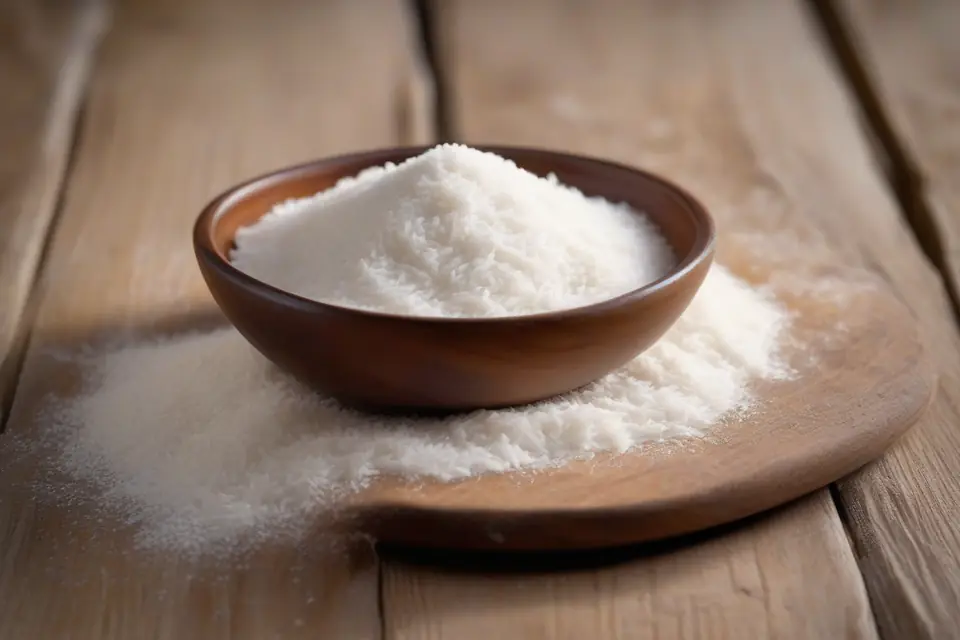
Rice flour calories
1 tablespoon · 9 g: about 30–40 kcal. 366 kcal per 100 g: 6 g protein, 80.1 g carbohydrate, 1.4 g fat.
In portions
| Portion | Amount | Calories |
|---|---|---|
| 1 tablespoon | 9 g | 30–40 kcal |
Nutrition facts (100 g)
| Energy | 366 kcal |
|---|---|
| Protein | 6 g |
| Carbohydrate | 80.1 g |
| Sugar | 0.1 g |
| Fiber | 2.4 g |
| Fat | 1.4 g |
| Saturated fat | 0.4 g |
| Sodium | 0 mg |
Where the calories come from: protein 7% · carbohydrate 89% · fat 4%.
Source: USDA FoodData Central record 169714. The same food can vary by ±10% with its variety, recipe and brand.
Frequently asked questions
Rice flour: how many grams and calories in 1 tablespoon?
1 tablespoon is about 9 g on average and has about 30–40 kcal.
Rice flour: how many calories in 100 grams?
Per 100 g there are 366 kcal, 6 g of protein, 80.1 g of carbohydrate and 1.4 g of fat.
Rice flour: does it make you gain weight?
No single food makes you gain weight on its own; your weight depends on the day’s total calories. 1 tablespoon (9 g) has about 33 kcal: about 2% of a 2,000 kcal day (the reference on nutrition labels). Its energy density is medium (3.7 kcal per gram). Most of its calories come from carbohydrate.
Write what you ate, let Ayarında do the math
Just write “2 eggs and a slice of cheese for breakfast” or take a photo of your plate; Ayarında calculates the calories and tells you what you can eat for the rest of the day.
Similar foods
Among grains, it is in the middle: 366 kcal per 100 g (average 343 kcal).
- Rice flour 1 tablespoon ~33 kcal
- Tarhana (dry) 1 tablespoon ~54 kcal · 2 g protein
- Quinoa (raw) 1 serving ~220 kcal · 8 g protein
- Brown rice (raw) 1 serving ~260 kcal · 5 g protein
- Pasta (dry) 1 serving ~300 kcal · 10 g protein
- Cornmeal 1 glass ~430 kcal · 10 g protein
- Wheat flour 1 glass ~440 kcal · 12 g protein
- Semolina 1 glass ~610 kcal · 22 g protein
- Rice (raw) 1 glass ~660 kcal · 13 g protein